Ever walked into a room and felt instantly overwhelmed by someone’s perfume – or detected a smell no one else seemed to notice?
Hyperosmia is heightened sensitivity to odour. And while it can feel unusual, it’s often a biological shift rather than a mystery. For many people, it’s temporary. For others, it signals that something in the body has changed.
What Is Hyperosmia?
Hyperosmia means you perceive smells more intensely than average. Odours feel stronger than usual – sometimes to the point they’re distracting or nauseating. Sharper, louder, harder to ignore. It differs from:
Normal sensitivity
Smells register, then fade into the background
Parosmia
Smells are distorted (coffee smells burnt, citrus smells chemical)
Anosmia
Reduced or lost smell (see our guide to anosmia)
With hyperosmia, the scent itself is accurate. It’s simply amplified.
“It’s a sensory nightmare”
For some, hyperosmia can seem like a party trick. One Reddit user described themselves as “a walking smoke detector, picking up cigarette smoke minutes before anyone else.” For others, it’s far less charming.
“I can't escape people's fragrances, it's a nightmare. I work from home because of the constant migraines.”
“They can make me feel sick in a similar way to motion sickness.”
These reactions aren’t theatrical. They reflect how tightly smell is wired to nausea pathways and emotional processing. In rare cases, heightened smell has drawn scientific attention.
A Scottish woman named Joy Milne, profiled in the New York Times, noticed a distinct change in her husband’s scent years before he was diagnosed with Parkinson’s disease. Her olfactory sensitivity helped steer research towards chemical changes in skin oils that may be linked with Parkinson’s.
While most cases of hyperosmia are not this dramatic, her story reinforces something important: smell sensitivity is biological, not imagined.
The Biology – Why Smell Feels So Immediate
Unlike other senses, our sense of smell bypasses the brain’s usual relay centre. It has a fast track, travelling directly to the olfactory bulb, then into the limbic system – the brain regions involved in memory, emotion, appetite and nausea.
Olfactory receptors → olfactory bulb → limbic system
That’s why scent can feel powerful – and why intensified smells can trigger visceral responses almost instantly.
Why It Can Feel Overwhelming
Hyperosmia isn’t just “a better sense of smell.” It changes how your whole system reacts. Some of the classic signs of hyperosmia are:
Lower sensory thresholds
Background odours – detergent, someone else’s perfume, a neighbour’s cooking – move to the foreground.
Nausea pathways that switch on more easily
Smell is closely linked to appetite regulation and the nausea reflex. When sensitivity rises, so can queasiness.
Learned associations
If a scent becomes linked with feeling unwell, the brain strengthens that pairing. Even the faintest trace of a scent – even one you previously loved – can trigger discomfort or disgust. In practical terms, hyperosmia means even a trace aroma – fresh coffee, washing powder, citrus peel – can feel magnified.
Hyperosmia amplifies your sense of smell, meaning even the faintest trace of a scent – like coffee – can smell overpowering
Common Causes of Hyperosmia – Why Some People Become “Super Smellers”
Hyperosmia often appears during periods of change.
After or during an infection
Heightened smell can occur after viral illness as part of post-viral olfactory dysfunction (PVOD), widely reported following Covid infections. Even long after an infection, low-grade swelling high in the nose (around the olfactory cleft, where smell receptors sit) can make certain odours feel sharper or more reactive than they used to.
GLP-1 medications
Some people report stronger smell responses and increased nausea while taking GLP-1 medicines, which act on gut–brain pathways that also influence appetite and scent perception. Read more in our guide to GLP-1 and smell sensitivity.
Pregnancy
Many pregnant women report changes or intolerance to smells. Coffee, meat, even a partner’s aftershave can become overwhelming. Research suggests sensitivity to specific odours may heighten – particularly around food – though it's usually temporary.
Hormonal fluctuations
Across the menstrual cycle, postpartum, and into perimenopause, olfaction can subtly shift. Oestrogen appears to influence how sensory information is filtered, meaning some days feel neutral, others more intense.
Migraine disorders
For some, smell sensitivity is part of the migraine picture. Before pain begins, light sharpens, sounds intensify – and scent becomes intrusive as sensory thresholds drop across the board.
Stress
When the nervous system is under strain, sensory filtering can reduce. Smells can seem sharper, or more intrusive.
Some Noses Are Simply Wired Differently
Not all noses are created equal. Brain imaging studies suggest that people who identify as “super smellers” often show subtle structural differences in areas linked to scent processing and memory
Then there’s genetics.
Humans carry around 400 genes dedicated to olfactory receptors – tiny molecular locks waiting for airborne keys. But not everyone has the same set in working order. Some receptors are slightly more responsive. Others are less so. A few may not function at all.
This means two people standing in the same room can register the same scent completely differently.
Living With Hyperosmia – Things That Help
- Increased ventilation – fresh air reduces scent build-up
- Opt for cold or room-temperature foods, which release fewer volatile compounds
- Choose fragrance-free cleaning products where possible
- Wear a well-fitted mask (like a surgical/KN95) in high-fragrance environments
- Cooler air can dull smell intensity – step outside, or switch on the air-conditioning
- Create one neutral space at home without added scent
-
Reintroduce fragrance gradually once sensitivity settles
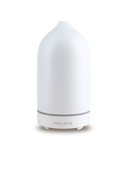
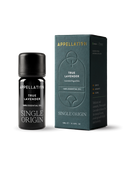
If you simply can't be without fragrance – and we totally understand – opt for gentle, lighter, natural scent, such as citrus essential oils through a diffuser on an intermittent setting, or choose single-note scents such as
lavender or eucalyptus over complex synthetic fragrance oils, which tend to linger and layer.
In certain phases, the most supportive environment is simply a clean, well-aired room.
Should You Seek Medical Advice?
An ENT assessment can be worthwhile – not always because it’s urgent, but because there can be “low-hanging fruit” contributors (such as chronic nasal inflammation, sinusitis, or polyps) that are treatable. For other natural and clinical interventions and ideas that may support smell disorders – including cold exposure, heat therapy and PRP –
see this article.
A Temporary Recalibration
Hyperosmia can feel isolating – particularly when others don’t perceive what you do.
But more often than not, it reflects recalibration: hormonal shifts, neurological change, medication effects, immune response, stress load. It can be frustrating, confusing and downright annoying, but the good news is, in many cases, the volume does turn down again.






What Is Hyperosmia – And Why Does It Happen?
Ever walked into a room and felt instantly overwhelmed by someone’s perfume – or detected a smell no one else seemed to notice?
Hyperosmia is heightened sensitivity to odour. And while it can feel unusual, it’s often a biological shift rather than a mystery. For many people, it’s temporary. For others, it signals that something in the body has changed.
What Is Hyperosmia?
Hyperosmia means you perceive smells more intensely than average. Odours feel stronger than usual – sometimes to the point they’re distracting or nauseating. Sharper, louder, harder to ignore. It differs from:
Normal sensitivity
Smells register, then fade into the background
Parosmia
Smells are distorted (coffee smells burnt, citrus smells chemical)
Anosmia
Reduced or lost smell (see our guide to anosmia)
“It’s a sensory nightmare”
For some, hyperosmia can seem like a party trick. One Reddit user described themselves as “a walking smoke detector, picking up cigarette smoke minutes before anyone else.” For others, it’s far less charming.
These reactions aren’t theatrical. They reflect how tightly smell is wired to nausea pathways and emotional processing. In rare cases, heightened smell has drawn scientific attention.
A Scottish woman named Joy Milne, profiled in the New York Times, noticed a distinct change in her husband’s scent years before he was diagnosed with Parkinson’s disease. Her olfactory sensitivity helped steer research towards chemical changes in skin oils that may be linked with Parkinson’s.
While most cases of hyperosmia are not this dramatic, her story reinforces something important: smell sensitivity is biological, not imagined.
The Biology – Why Smell Feels So Immediate
Unlike other senses, our sense of smell bypasses the brain’s usual relay centre. It has a fast track, travelling directly to the olfactory bulb, then into the limbic system – the brain regions involved in memory, emotion, appetite and nausea.
That’s why scent can feel powerful – and why intensified smells can trigger visceral responses almost instantly.
Why It Can Feel Overwhelming
Hyperosmia isn’t just “a better sense of smell.” It changes how your whole system reacts. Some of the classic signs of hyperosmia are:
Lower sensory thresholds
Background odours – detergent, someone else’s perfume, a neighbour’s cooking – move to the foreground.
Nausea pathways that switch on more easily
Smell is closely linked to appetite regulation and the nausea reflex. When sensitivity rises, so can queasiness.
Learned associations
If a scent becomes linked with feeling unwell, the brain strengthens that pairing. Even the faintest trace of a scent – even one you previously loved – can trigger discomfort or disgust. In practical terms, hyperosmia means even a trace aroma – fresh coffee, washing powder, citrus peel – can feel magnified.
Common Causes of Hyperosmia – Why Some People Become “Super Smellers”
Hyperosmia often appears during periods of change.
After or during an infection
Heightened smell can occur after viral illness as part of post-viral olfactory dysfunction (PVOD), widely reported following Covid infections. Even long after an infection, low-grade swelling high in the nose (around the olfactory cleft, where smell receptors sit) can make certain odours feel sharper or more reactive than they used to.
GLP-1 medications
Some people report stronger smell responses and increased nausea while taking GLP-1 medicines, which act on gut–brain pathways that also influence appetite and scent perception. Read more in our guide to GLP-1 and smell sensitivity.
Pregnancy
Many pregnant women report changes or intolerance to smells. Coffee, meat, even a partner’s aftershave can become overwhelming. Research suggests sensitivity to specific odours may heighten – particularly around food – though it's usually temporary.
Hormonal fluctuations
Across the menstrual cycle, postpartum, and into perimenopause, olfaction can subtly shift. Oestrogen appears to influence how sensory information is filtered, meaning some days feel neutral, others more intense.
Migraine disorders
For some, smell sensitivity is part of the migraine picture. Before pain begins, light sharpens, sounds intensify – and scent becomes intrusive as sensory thresholds drop across the board.
Stress
When the nervous system is under strain, sensory filtering can reduce. Smells can seem sharper, or more intrusive.
Some Noses Are Simply Wired Differently
Not all noses are created equal. Brain imaging studies suggest that people who identify as “super smellers” often show subtle structural differences in areas linked to scent processing and memory
Then there’s genetics.
Humans carry around 400 genes dedicated to olfactory receptors – tiny molecular locks waiting for airborne keys. But not everyone has the same set in working order. Some receptors are slightly more responsive. Others are less so. A few may not function at all.
This means two people standing in the same room can register the same scent completely differently.
Living With Hyperosmia – Things That Help
Should You Seek Medical Advice?
A Temporary Recalibration